Last reviewed: July 2026
Choosing an electric bike or e-scooter involves more than comparing price, motor power and advertised range. The right product must suit the rider, intended use, storage space, local terrain and UK law. Parts availability, maintenance and dependable after-sales support also matter over the product's lifetime.
Quick takeaway: Choose a compliant electric bike if you need a practical vehicle for lawful public-road and cycle-route use. A privately owned e-scooter cannot currently be ridden legally on UK public roads, pavements, cycle lanes or other public land and should only be used on private land with the landowner's permission.
Electric Bike or Private-Land E-Scooter?
Electric bikes
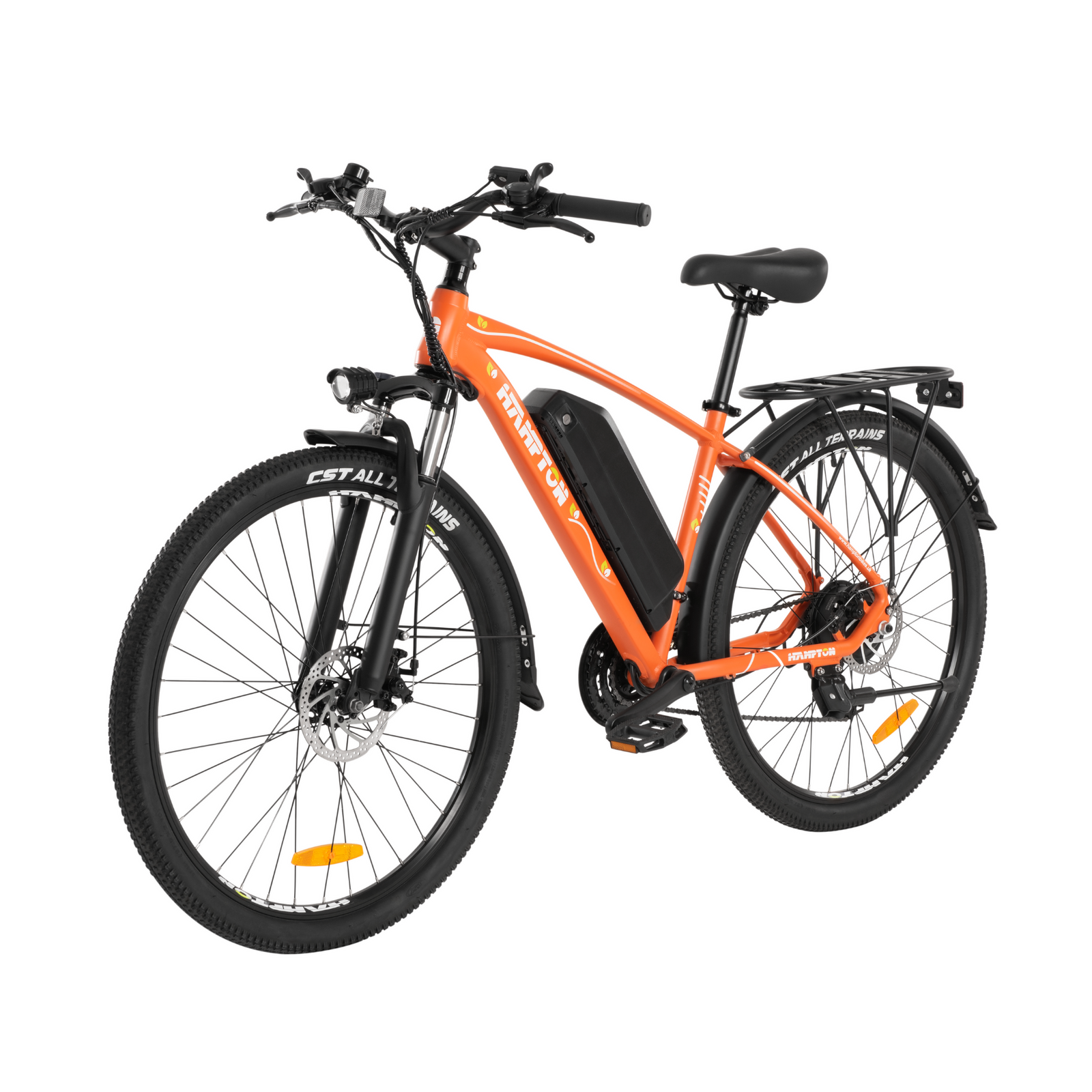
A road-legal electric bike can suit commuting, leisure riding, hills, local journeys and longer trips. The pedals, larger wheels and seated riding position generally make an e-bike more practical for regular transport.
- Suitable for public-road use when it meets EAPC rules
- More comfortable for longer journeys
- Can carry luggage using racks, baskets or panniers
- Available in folding, city, hybrid, cargo and fat-tyre designs
- Requires normal bicycle maintenance as well as battery care
Privately owned e-scooters
E-scooters are compact and often foldable, but their lawful use is far more restricted. Privately owned models cannot currently be used legally on public roads, pavements, cycle lanes, parks or other public land.
- Private-land use only, with the landowner's permission
- Standing riding position and smaller wheels
- Folding does not necessarily mean lightweight
- Powerful models may be especially heavy
- Approved rental-trial scooters operate under separate rules
Check UK Legality Before Buying
Road-legal electric bikes
In Great Britain, an electric bike can generally be used like an ordinary pedal cycle if it qualifies as an Electrically Assisted Pedal Cycle, commonly called an EAPC.
A compliant EAPC must generally:
- have pedals that can propel the bike;
- have a motor with a maximum continuous-rated power output of no more than 250W;
- stop providing motor assistance when the bike reaches 15.5 mph or 25 km/h; and
- be ridden by someone aged 14 or over.
A compliant EAPC does not require vehicle registration, road tax, motor insurance or a driving licence. It can be used where ordinary pedal cycles are permitted, but not on pavements.
Some throttle-controlled or "twist-and-go" models require vehicle approval. A bike that exceeds the EAPC limits may be treated as a moped or motorcycle and could require approval, registration, tax, insurance, an appropriate driving licence and an approved motorcycle helmet.
Read our detailed UK electric-bike laws guide before buying if you are uncertain.
Privately owned e-scooters
UK legal notice: It remains against the law to ride a privately owned e-scooter on public roads, pavements, cycle lanes or other public land. Private e-scooters may only be used on private land with the landowner's permission. Different rules govern approved rental scooters used within official trial areas.
Customers are responsible for checking the law and ensuring that their intended location and use are lawful. Product availability or ownership does not create permission to use a private e-scooter in public.
See our current guide to UK e-scooter laws and riding rules.
Start With the Intended Use
Before comparing technical specifications, decide what you genuinely need the product to do.
Commuting and everyday transport
Prioritise a road-legal EAPC, dependable brakes, suitable tyres, lights, mudguards, luggage options and a comfortable riding position. Consider the total journey rather than battery range alone.
Folding and limited storage
Check the folded dimensions as well as the product's weight. A folding bike or scooter can still be difficult to carry upstairs, lift into a vehicle or store in a small flat.
Hills and longer journeys
Battery capacity, rider weight, gearing, motor torque and the type of assistance sensor all affect performance. A larger advertised motor figure does not automatically make a bike lawful or suitable.
Rougher surfaces and private land
Tyre volume, wheel size, suspension, braking and frame strength matter. Do not assume that large tyres or suspension make a product suitable for every surface or riding style.
Choose the Correct Frame and Fit
A comfortable, properly sized bike is generally easier and safer to control. Consider rider height, inside-leg measurement, reach to the handlebars, saddle adjustment and how confidently the rider can stop and place a foot on the ground.
Step-through frames can make mounting easier. Folding bikes improve storage flexibility, while full-size city and hybrid frames may provide greater stability and comfort. Cargo and fat-tyre bikes can carry more weight or handle mixed surfaces but are often substantially heavier.
Whenever possible, visit a physical retailer to see the product's size and riding position before buying. Manufacturer height ranges are useful starting points, but they do not guarantee a perfect fit.
Understand Battery Capacity and Realistic Range
Battery capacity is normally expressed in watt-hours, or Wh. It provides a more meaningful comparison than battery voltage or amp-hours alone.
As a simple example:
Battery voltage × amp-hours = approximate watt-hours
A 36V 10Ah battery has an approximate capacity of 360Wh, while a 48V 15Ah battery has an approximate capacity of 720Wh.
Range warning: Advertised range is an estimate, not a guarantee. Actual range depends on rider weight, hills, wind, temperature, tyre pressure, riding mode, speed, load, battery condition, stopping and starting, and the level of motor assistance used.
If range is important, allow a sensible reserve instead of selecting a product whose advertised maximum only just covers the planned journey. Batteries also lose usable capacity gradually as they age.
For more detail, read our battery lifespan and range guide.
Motor Type and Assistance Feel
Most affordable electric bikes use a hub motor in the front or rear wheel. Mid-drive motors apply assistance through the bicycle's drivetrain and can feel more natural on hills, although they may cost more and can increase drivetrain wear.
The assistance sensor also affects how the bike responds:
-
Cadence sensors detect pedalling movement and normally deliver assistance in noticeable levels.
-
Torque sensors measure pedalling force and usually provide smoother, more proportional assistance.
Do not choose an electric bike based only on headline power figures. Legal classification, reliability, controllability, battery capacity and access to compatible parts are equally important.
Brakes, Tyres and Suspension
Electric bikes and e-scooters are heavier than comparable non-electric products, so dependable braking and correctly maintained tyres are essential.
-
Mechanical disc brakes: straightforward to adjust and repair, but require periodic cable adjustment.
-
Hydraulic disc brakes: usually provide stronger, smoother braking but need appropriate servicing.
-
Pneumatic tyres: normally provide better comfort and grip but can puncture.
-
Solid tyres: remove puncture risk but can reduce grip and ride comfort.
-
Suspension: can improve comfort on uneven surfaces but adds weight and maintenance requirements.
Tyre size, tread pattern and pressure should match the product and intended conditions. Never exceed the pressure or load limits specified by the manufacturer.
Weight, Folding and Storage
Check the product's complete weight, including the battery. Some high-powered bikes and scooters can weigh 30kg, 40kg or more and may not be realistic to carry upstairs or lift into a car.
Before ordering, ask:
- Can I lift and move it safely?
- Will it fit through my doors and into the available storage space?
- Can the battery be removed for charging or storage?
- Is there a suitable dry charging location?
- Will the folded product fit where I intend to keep it?
- Can I secure it properly against theft?
Maintenance, Spare Parts and Support
Electric bikes and e-scooters are vehicles containing parts that wear, loosen and require adjustment. They should not be treated as maintenance-free electronic gadgets.
Regular attention may be required for:
- tyres and tyre pressure;
- brakes and brake pads;
- chains, gears and cassettes on bicycles;
- wheel bearings and steering components;
- folding mechanisms and fasteners;
- lights, wiring and charging ports;
- batteries, chargers, controllers and displays; and
- firmware or app settings where applicable.
Before buying, check whether replacement batteries, chargers, displays, brake parts, tyres and other model-specific components are realistically available. A low purchase price can become poor value if a simple component cannot be sourced later.
Battery and Charging Safety
Use only the charger supplied with the product or one specifically approved by the manufacturer for that exact battery. Charge in a dry, ventilated location on a suitable hard surface, away from combustible materials and escape routes.
Charge while awake and present. Do not charge a battery that is swollen, leaking, wet, damaged, unusually hot, making unusual sounds or producing an unfamiliar smell. Stop using and charging a product after serious impact, water ingress or visible battery damage until it has been professionally assessed.
Never open, modify or attempt a home repair of a lithium-ion battery pack.
Pre-Purchase Checklist
✓ Is the product legal for its intended use?
✓ Does the frame fit the rider?
✓ Is the realistic range sufficient?
✓ Can the product be lifted and stored?
✓ Are the brakes and tyres suitable?
✓ Is the correct charger supplied?
✓ Are replacement parts available?
✓ Is workshop support available?
✓ Are the warranty terms clear?
✓ Is there a safe charging location?
Why Buy From Electric Scooters London?
Electric Scooters London is a specialist UK retailer with a physical shop and workshop in Twickenham. We provide practical buying advice, product assembly, diagnostics, servicing, repairs, replacement parts and after-sales support.
Every new electric bike or e-scooter purchased directly from us includes a workshop-based six-month service. The service does not include collection, delivery, replacement parts or additional repair work, but it gives customers an opportunity to have important mechanical and safety items inspected.
You are welcome to contact us before ordering if you need help comparing products, checking rider suitability or understanding the legal status of a particular model.
Frequently Asked Questions
Can I ride a privately owned e-scooter on UK roads?
No. Privately owned e-scooters cannot currently be used legally on public roads, pavements, cycle lanes or other public land. They may only be used on private land with the landowner's permission.
What makes an electric bike road legal?
In Great Britain, it must generally qualify as an EAPC: it must have usable pedals, a motor with no more than 250W continuous-rated power and assistance that stops at 15.5 mph. The rider must be at least 14.
How much battery range do I need?
Choose a battery that provides more than the minimum distance you expect to travel. Advertised maximum range can fall significantly because of hills, weather, rider weight, tyre pressure, speed and assistance level.
Should I choose a cadence or torque sensor?
A cadence sensor normally provides simpler, level-based assistance. A torque sensor responds to pedalling effort and usually feels smoother and more natural. The better choice depends on budget and riding preference.
Are folding electric bikes easy to carry?
Not always. Folding reduces the stored size but does not necessarily reduce weight. Check the complete product weight and folded dimensions before buying.
Do electric bikes and e-scooters need servicing?
Yes. Brakes, tyres, fasteners, folding mechanisms, steering, wheels and electrical components require regular inspection and maintenance. Stop riding if the product develops a safety-related fault.
Visit or Contact Us
Electric Scooters London
11 Campbell Road
Twickenham, London TW2 5BY
Telephone: 020 8703 5387
Email: support@electricscooterslondon.com
This guide provides general buying and legal information rather than individual legal advice. Rules and official guidance may change. Check the latest GOV.UK electric-bike guidance and GOV.UK e-scooter guidance where necessary.