




Last updated: July 2026
Choosing a bicycle can feel unnecessarily complicated. Road, mountain, hybrid, gravel, folding, cargo, fat-tyre and electric bikes are designed around different combinations of speed, comfort, practicality and terrain capability.
The best bike is not necessarily the most expensive or technically advanced. It is the one that suits the journeys you will actually make, the surfaces you ride on, what you need to carry and where you will keep it.
Types of bikes at a glance
Road bike
Best for: Speed, fitness and longer rides.
Surface: Smooth tarmac.
Consider: A sporty position and less comfort on rough surfaces.
Mountain bike
Best for: Trails and genuinely rough ground.
Surface: Uneven and technical off-road terrain.
Consider: Additional weight and slower road performance.
Hybrid bike
Best for: Everyday riding, leisure and commuting.
Surface: Roads and smoother paths.
Consider: Versatile, but less specialised than a road or mountain bike.
City bike
Best for: Practical journeys, shopping and regular transport.
Surface: Roads and suitable cycle routes.
Consider: Comfort and equipment are prioritised over speed.
Gravel bike
Best for: Mixed-surface and longer rides.
Surface: Tarmac, rough lanes and gravel tracks.
Consider: Not a substitute for a full mountain bike on technical trails.
Touring bike
Best for: Long journeys with luggage.
Surface: Roads and suitable mixed routes.
Consider: Stable and practical, but normally heavier than a road bike.
Folding bike
Best for: Limited storage and mixed transport.
Surface: Roads and everyday routes.
Consider: Check the folded dimensions and total weight carefully.
Cargo bike
Best for: Children, shopping, deliveries and equipment.
Surface: Roads and suitable cycle routes.
Consider: Size, weight, braking, load limits and storage.
Fat-tyre bike
Best for: Stability, cushioning and loose surfaces.
Surface: Mixed, soft or uneven ground.
Consider: More weight, rolling resistance and tyre expense.
Electric bike
Best for: Hills, longer journeys and carrying loads with assistance.
Surface: Depends on the underlying bike design.
Consider: UK legality, battery, weight, servicing and parts support.
1. Road bikes
Road bikes are built for speed and efficiency on paved surfaces. They normally use lightweight frames, relatively narrow tyres and drop handlebars, allowing the rider to adopt a lower position and change hand placement during longer journeys.
They are well suited to fitness riding, club rides, sportives and covering road distances efficiently. However, a race-oriented road bike may feel less comfortable on broken surfaces, towpaths and stop-start journeys.
Best for: Speed, fitness and longer rides on smooth roads.
2. Mountain bikes
Mountain bikes provide grip, control and durability on rough ground. They normally have wide treaded tyres, flat handlebars, low gearing and suspension.
Hardtail mountain bike
Uses front suspension with a rigid rear frame. It is generally lighter, simpler and less expensive than a full-suspension model.
Full-suspension mountain bike
Uses both front and rear suspension for greater control and comfort on more demanding terrain, with additional cost, weight and maintenance.
A mountain bike can be ridden on roads, but heavily treaded tyres and suspension often make it slower and less efficient than a hybrid. If most of your riding is on tarmac, do not assume that a mountain bike is automatically the most comfortable choice.
Best for: Trails, bridleways and rough off-road riding.
3. Hybrid bikes
Hybrid bikes combine features of road and mountain bikes. They usually have flat handlebars, medium-width tyres and a riding position that balances comfort with efficiency.
For many people, a hybrid is the most adaptable conventional bicycle. It can handle everyday road journeys, leisure rides, park paths and smoother towpaths without becoming excessively heavy or specialised.
The word “hybrid” covers a broad range. Some models are light and road-focused, while others use wider tyres or front suspension. Always examine the individual specification instead of relying only on the category name.
Best for: Everyday use, fitness, leisure and riders wanting one versatile bicycle.
4. City and commuter bikes
City bikes are designed around day-to-day practicality. They commonly provide an upright riding position and may include useful equipment such as:
- mudguards
- a rear rack
- integrated lights
- a kickstand
- a chain guard
- internal hub gears
A “commuter bike” is not one fixed design. It may be a city bike, hybrid, road bike, folding bike or electric bike. The term describes how the bike is used rather than its exact frame style.
Best for: Work travel, shopping and regular short-to-medium journeys.
5. Gravel bikes
A gravel bike resembles a road bike but is designed to cope with a greater variety of surfaces. It usually combines drop handlebars with wider tyre clearance, lower gearing, disc brakes and more stable handling than a race-focused road bike.
Gravel bikes can be efficient on tarmac while remaining capable on rough lanes, unpaved tracks and light trails. This makes them attractive to riders whose routes regularly combine several surfaces.
They are not full mountain bikes. Most gravel bikes have less grip, suspension and technical-trail control than a purpose-built mountain bike.
Best for: Mixed surfaces, rough roads, gravel tracks and versatile longer rides.
6. Touring and bikepacking bikes
Touring bikes are designed for stability, reliability and carrying luggage. They commonly include mounting points for racks, panniers, mudguards, bottles and other equipment.
The frame, gearing, brakes and wheels should be suitable for the expected load. Comfort and predictable handling are normally prioritised over low weight and maximum speed.
Bikepacking describes a way of carrying equipment in bags attached to the frame, handlebars and seat area. Gravel, touring, mountain and hybrid bikes can all be used for bikepacking when suitable for the route and load.
Best for: Long-distance riding, multi-day trips and carrying luggage.
7. Folding bikes
Folding bikes are designed for easier storage and transport. They can be useful in flats, offices, motorhomes and journeys that combine cycling with trains or cars.
Before buying a folding bike, check:
- its folded dimensions
- its complete weight, including the battery if electric
- how quickly and securely it folds
- whether it can be rolled while folded
- whether you can comfortably lift it
- whether the riding position suits your height
Best for: Limited storage, mixed transport and travel.
8. Cargo bikes
Cargo bikes are designed to carry more than an ordinary bicycle. Depending on the model, they may transport shopping, tools, deliveries, equipment or children using compatible seating and restraints.
Longtail
An extended rear section provides space for cargo, bags or compatible passenger equipment.
Front-loader
A load platform or box is positioned in front of the rider, normally between the handlebars and front wheel.
Compact cargo bike
A shorter utility design that can be easier to ride and store than a full-size cargo bike.
Cargo trike
A three-wheeled design offering greater stationary stability but different cornering and handling characteristics.
Follow the manufacturer’s load limits and instructions. Additional weight affects braking distance, steering and balance, while the bike’s length may create storage and access problems.
Best for: Family transport, shopping, deliveries and work equipment.
9. Comfort and cruiser bikes
Comfort and cruiser bikes prioritise relaxed riding. They often have swept-back handlebars, a wide saddle, an upright posture and wider tyres.
They work well on flatter routes and shorter leisure journeys. Their weight and riding position can make them less efficient for steep hills, high-speed riding or long distances.
Best for: Relaxed leisure riding and riders who prefer an upright position.
10. Fat-tyre bikes
Fat-tyre bikes use unusually wide tyres to provide a large contact area, cushioning and grip on loose or uneven surfaces.
The trade-offs include additional weight, increased rolling resistance and more expensive replacement tyres and tubes. Wide tyres can absorb smaller imperfections, but they do not work in the same way as properly designed suspension.
Fat tyres are common on electric bikes because motor assistance helps compensate for the additional resistance. However, the bike can remain very heavy when the battery is empty or assistance is unavailable.
Best for: Riders prioritising stability, cushioning and mixed-surface capability over low weight.
11. Single-speed and fixed-gear bikes
A single-speed bike uses one gear ratio. It can be light, mechanically simple and relatively easy to maintain, especially on flatter routes.
A fixed-gear bike is different: the pedals remain mechanically connected to the rear wheel whenever the bike moves. This requires a particular riding technique and is not ideal for everyone.
Road-use and braking requirements still apply. Mechanical simplicity must not come at the expense of safe stopping.
Best for: Flatter routes and experienced riders who value simplicity.
12. BMX bikes
BMX bikes are compact, strong and highly manoeuvrable. Different models are designed for racing, skateparks, tricks, jumps or pump tracks.
Their small wheels and short frames make them agile, but usually less practical for commuting and longer everyday journeys.
Best for: BMX racing, tricks, jumps and skateparks.
13. Children’s bikes
Children’s bicycles include balance bikes, first pedal bikes and youth versions of road, hybrid and mountain bikes.
Correct sizing is essential. An oversized bicycle can be difficult to control and may reduce confidence. Check that the child can reach and operate the brakes, control the steering and place their feet down appropriately for the bike’s design.
Best for: Age-appropriate learning, recreation and family cycling.
14. Electric bikes
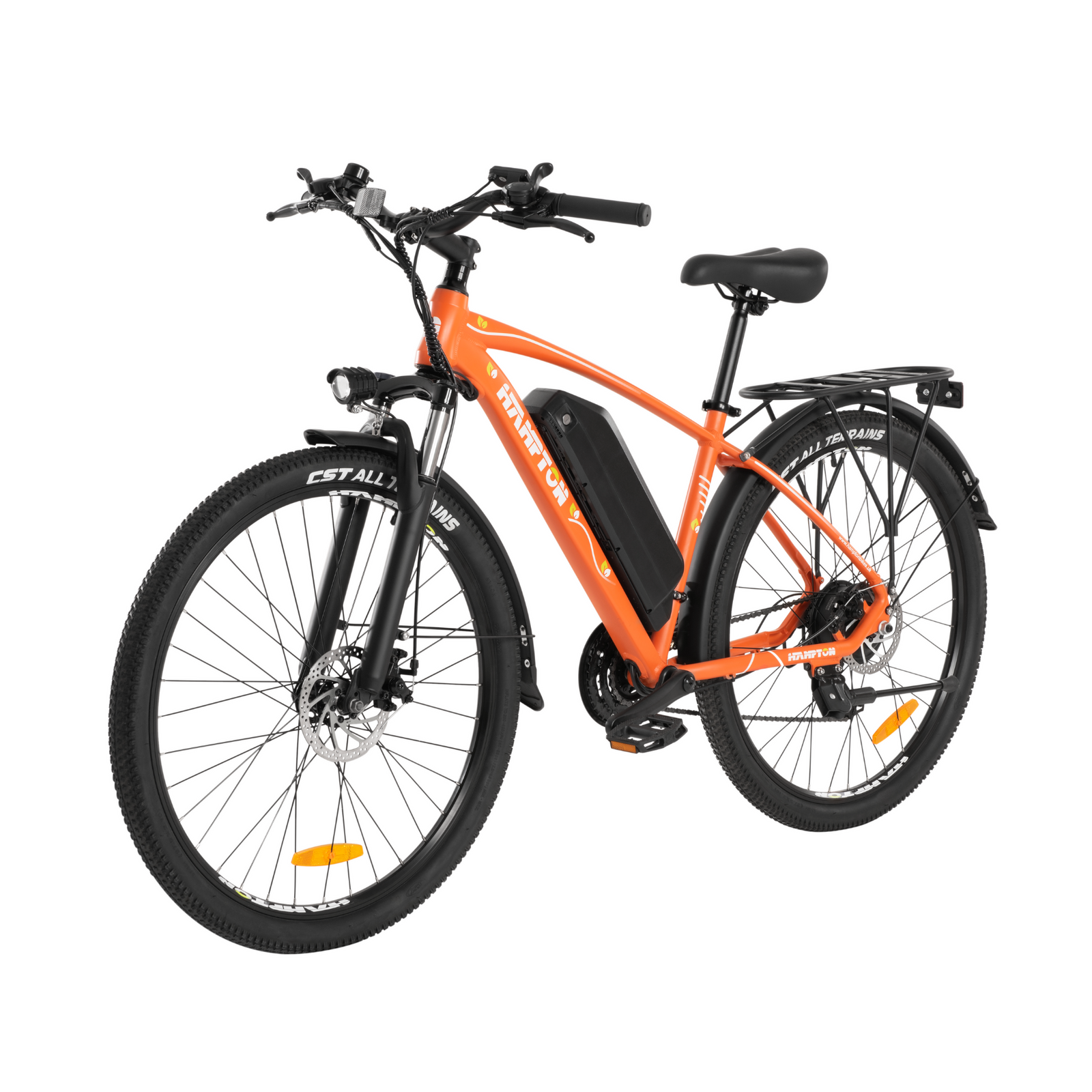
An electric bike is not one particular frame type. Road, hybrid, mountain, folding, cargo, city, gravel and fat-tyre bikes can all be produced with electrical assistance.
Motor assistance can help riders:
- manage hills more comfortably
- cover longer distances
- carry suitable loads
- reduce the effort required for regular journeys
- return to cycling after time away
Electric bikes are generally heavier than comparable conventional bikes. Buyers should consider battery range, charging, total weight, replacement-part availability, motor type and access to competent servicing.
An electric bike that falls outside the EAPC requirements is generally treated as a motor vehicle rather than an ordinary bicycle. Read our complete UK e-bike laws guide before buying or modifying a bike.
Step-through or step-over frame?
Step-through frame
A low or absent upper tube makes the bike easier to mount and dismount. It can be helpful during frequent stops, when carrying a rear load or for riders with reduced mobility.
Step-over frame
A traditional higher top tube is common on road, mountain and performance-focused bikes. The suitability still depends on frame size, geometry and the rider.
Neither design is inherently intended for one gender. Choose according to comfort, access, intended use and correct sizing.
How to choose the right bike
Start with your real journeys
Choose for what you will do most weeks. Do not buy a highly specialised bike for an occasional journey if it makes everyday riding less practical.
Consider the surface
Smooth roads favour road, city and hybrid bikes. Mixed routes may suit a gravel bike or wider-tyred hybrid. Technical trails normally require a mountain bike.
Choose a comfortable position
A low position can improve efficiency, while a more upright position may improve day-to-day comfort and visibility. The correct choice depends on the rider.
Check size and fit
Use the manufacturer’s sizing information and consider your height, inside-leg measurement, reach and mobility. The category alone cannot tell you whether a bike will fit.
Measure your storage space
Check the bike’s complete dimensions and weight. Consider stairs, doorways, shared hallways, lifts and whether the storage area is secure and dry.
Plan what you need to carry
Check for rack and pannier compatibility. If regularly carrying children or heavier loads, consider a purpose-built cargo bike rather than overloading an ordinary bicycle.
Consider maintenance and support
Suspension, hydraulic brakes, electronic gearing and electrical assistance may improve performance but require suitable maintenance and replacement parts.
Which bike should you choose?
- Choose a road bike for speed and efficient riding on smooth tarmac.
- Choose a mountain bike for trails and genuinely rough off-road terrain.
- Choose a hybrid for versatile everyday riding on roads and smoother paths.
- Choose a city bike for practical journeys and an upright riding position.
- Choose a gravel bike for roads, rough lanes and mixed-surface rides.
- Choose a touring bike for longer journeys with luggage.
- Choose a folding bike when storage or mixed transport is the main priority.
- Choose a cargo bike when carrying children, shopping or equipment is central to the journey.
- Choose a fat-tyre bike when grip and cushioning matter more than low weight.
- Choose an electric bike when compliant assistance would make hills, loads or longer journeys more manageable.
Common bike-buying mistakes
- choosing mainly by appearance
- buying the wrong frame size
- ignoring the complete bike weight
- buying aggressive off-road tyres for mostly road use
- forgetting about storage and security
- buying a folding bike without checking its folded dimensions
- assuming every electric bike is automatically road legal
- ignoring servicing and replacement-part availability
- expecting one specialised bike to perform every task equally well
Find a bike for your journey
Compare conventional and electric bikes, or visit our Twickenham shop for practical advice and support from our London workshop.
Frequently asked questions
What is the most versatile type of bike?
A hybrid is often the most versatile choice for everyday riding. A gravel bike may suit riders who want drop handlebars and greater mixed-surface capability.
Which bike is best for commuting?
A hybrid or city bike suits many journeys. A folder may be better when storage or public transport matters, while a compliant e-bike can help on longer or hillier routes.
What is the difference between road and gravel bikes?
A road bike prioritises speed on tarmac. A gravel bike normally has wider tyre clearance, more stable handling and greater capability on rough roads and unpaved tracks.
Can I use a mountain bike on the road?
Yes, but it may be heavier and less efficient than a hybrid. If you rarely ride off-road, a hybrid or city bike may be more practical.
Are folding bikes suitable for longer rides?
Some are, but comfort, gearing, wheel size and fit vary. Folding bikes are usually chosen primarily for transport and storage convenience.
Are fat-tyre bikes better?
Not universally. They can provide grip and cushioning, but are normally heavier and create more rolling resistance.
Is an electric bike a separate bike type?
Electric assistance is a propulsion system rather than one frame category. Road, hybrid, mountain, folding, cargo and other bikes can all be electrically assisted.
Are all electric bikes road legal?
No. In Great Britain, the bike must meet the EAPC requirements to be treated broadly like an ordinary pedal cycle.
Final thoughts
Bike categories are useful starting points, but their boundaries overlap. A sporty hybrid may resemble a flat-bar road bike, a gravel bike can carry touring equipment, and folding, cargo or mountain bikes can all be electrically assisted.
Start with your real journeys. Consider the surfaces, distance, fit, comfort, storage and carrying requirements before comparing detailed specifications. A bike that fits your daily life will usually provide more value than a specialised model chosen mainly for its appearance.
For more help choosing an electrically assisted model, read our UK electric-bike buyer’s guide.
This article provides general buying and legal information. Check the manufacturer’s specifications, select an appropriate frame size and confirm the current rules before purchasing or using a bicycle.


