


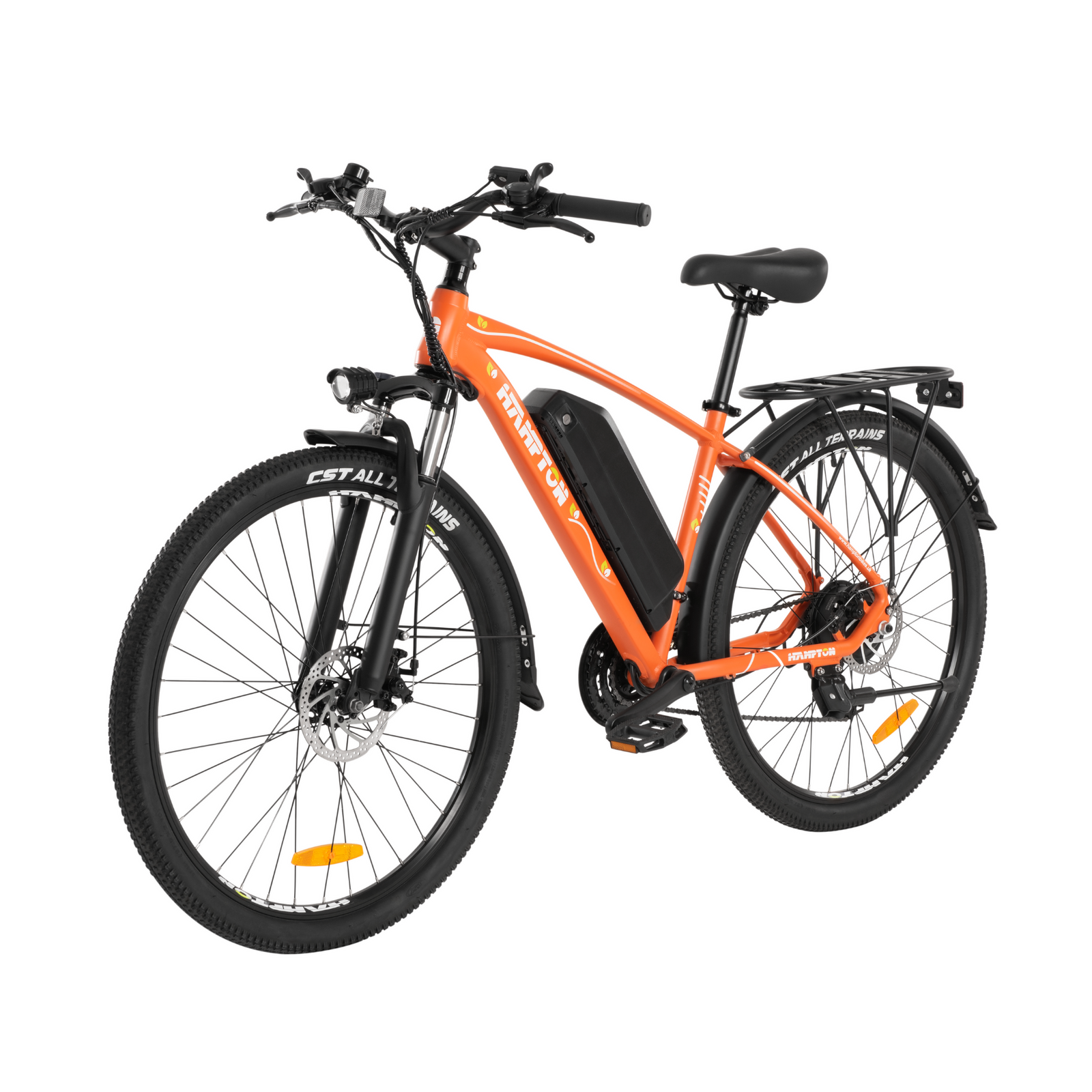

Our Approach to Responsible Electric Mobility
Last reviewed: July 2026
Electric Scooters London supplies electric bikes, private-land electric scooters, parts and accessories, supported by repairs and servicing from our London workshop.
We believe electric mobility can contribute to more practical transport choices, particularly when a suitable electric bike replaces a journey that would otherwise be made by car. However, environmental responsibility involves more than selling electrically powered products.
It also means explaining UK law accurately, helping customers choose appropriate products, supporting repairs, promoting safe battery use and ensuring that electrical components are recycled responsibly at the end of their useful life.
Our approach: Help customers choose suitable products, use them safely and legally, maintain them properly and keep them in service for as long as reasonably practical.
What responsible electric mobility means to us
Terms such as "green", "sustainable" and "eco-friendly" are often used too broadly. An electric bike or scooter still requires raw materials, manufacturing, packaging, batteries and transport.
Its environmental impact depends on several factors, including:
- how and where it was manufactured
- the type and size of its battery
- how far it is transported
- what journeys it replaces
- how frequently and for how long it is used
- whether it can be maintained and repaired
- what happens to it at the end of its life
We therefore do not describe every electric product or purchase as automatically environmentally friendly. Instead, we focus on specific actions that can support more responsible ownership and longer product life.
Electric bikes as an everyday transport option
A suitable electric bike can help make cycling more accessible by providing assistance on hills, longer journeys and when carrying additional weight. It may also allow some riders to replace shorter car journeys.
Potential uses include:
- travelling to work
- local shopping
- school and family journeys
- leisure and fitness riding
- longer journeys that may be difficult on an ordinary bicycle
- carrying loads with an appropriately designed cargo bike
The practical benefit depends on choosing the right frame, size, battery capacity, motor system and riding position. A bike that is uncomfortable, unsuitable or difficult to maintain is less likely to remain in regular use.
Our electric-bike buyer's guide explains how to compare these factors before purchasing.
UK road-legal electric bikes
Not every product advertised as an electric bike can legally be used like a normal bicycle on UK roads.
In Great Britain, an electric bike generally needs to qualify as an Electrically Assisted Pedal Cycle, or EAPC. A compliant EAPC must:
- have pedals capable of propelling it
- use a motor with a maximum continuous-rated power of no more than 250W
- stop providing electrical propulsion once the bike reaches 15.5 mph or 25 km/h
Throttle-only propulsion above walking speed may require type approval. The rider must also be at least 14 years old.
An e-bike that falls outside the EAPC rules may be treated as a motor vehicle. Registration, insurance, an appropriate driving licence, an approved helmet and other legal requirements may then apply before it can be used on public roads.
Marketing descriptions such as "road legal", "off-road mode" or "250W nominal" should not replace checking the bike's actual specification, markings and approval status.
Read our complete guide: UK E-Bike Laws: What Makes an Electric Bike Road Legal?
Privately owned electric scooters and UK law
Privately owned e-scooters are not currently legal to ride on UK public roads, pavements, cycle lanes, parks or other public places.
They may be used on private land with the permission of the landowner or occupier. Electric Scooters London does not encourage or promote unlawful use in public places.
Approved rental e-scooters operating within official government trial schemes are subject to a separate legal framework. The rules applying to an authorised rental scooter do not make a privately owned scooter legal for public-road use.
We support:
- clear information before purchase
- responsible private-land use
- appropriate safety equipment
- correct battery charging and storage
- regular inspection and maintenance
- compliance with current UK law
Read our guide: UK E-Scooter Laws: Where Can You Legally Ride?
Legal reminder: Electric-bike and e-scooter laws can change. Check current GOV.UK guidance and the classification of the specific product before using it in a public place.
A repair-first approach
Responsible ownership does not end when a product leaves the shop. Electric bikes and electric scooters contain mechanical, electrical and battery components that require inspection and maintenance.
A worn tyre, damaged brake, gear problem, faulty connector or replaceable electrical component should not automatically turn an otherwise serviceable product into waste.
Our London workshop provides diagnostics, servicing and repairs for electric bikes and electric scooters. Depending on the product, fault, condition and availability of compatible parts, professional diagnosis may allow the product to remain in use.
Common workshop work can include:
- tyres, inner tubes and punctures
- brake adjustment and replacement
- gear and drivetrain servicing
- wheel and bearing problems
- folding-mechanism inspection
- electrical fault diagnosis
- display, controller and wiring replacement where supported
- battery and charging-system assessment
Not every repair is safe or economically practical. Structural damage, severe water ingress, fire damage or an unsafe battery requires careful professional assessment.
View our electric-bike and electric-scooter repair services.
Choosing products with long-term support
A product's useful life can depend on whether parts, approved chargers and technical information remain available.
Before purchasing, customers should consider:
- whether the bike or scooter is suitable for its intended use
- the manufacturer's UK presence and support arrangements
- availability of replacement batteries and approved chargers
- availability of brake, drivetrain and electrical components
- warranty and after-sales support
- whether a competent workshop can service the product
- the expected cost of important replacement parts
A very low initial price may offer poor long-term value if a minor proprietary component cannot be replaced.
Battery charging and fire safety
Lithium-ion batteries are widely used because they can store substantial energy in a relatively compact and lightweight pack. They require appropriate manufacturing, charging, handling and storage.
Customers should:
- use only the charger supplied or approved for the battery
- follow the manufacturer's charging instructions
- charge on a stable, dry and non-combustible surface
- keep charging equipment away from escape routes
- avoid charging while asleep or away from the property
- protect the battery from impact, crushing and water ingress
- stop using a battery that is swollen, leaking, overheating or behaving abnormally
- check for official product-safety notices and recalls
Do not open, puncture, modify or attempt to rebuild an e-bike or e-scooter battery at home.
If a battery is smoking or on fire:
Raise the alarm, get everyone out, stay out and call 999. Do not attempt to recover the battery or re-enter the property.
Read our e-bike and e-scooter battery fire-safety guide.
Reducing premature e-waste
An electric bike or scooter contains metals, plastics, electronic controls, wiring and a lithium-ion battery. Replacing the complete product prematurely can discard components that may still have a useful life.
Owners can help extend product life by:
- choosing the right product initially
- maintaining tyres, brakes and the drivetrain
- following manufacturer battery instructions
- investigating faults promptly
- using approved replacement components
- repairing suitable faults rather than replacing the entire product
- reselling or donating a safe and serviceable product that is no longer needed
Our article on making an e-bike last longer and reducing e-waste provides more detailed guidance.
Responsible battery and electrical recycling
Lithium-ion batteries must not be placed in household rubbish or general household recycling. If damaged or crushed during waste collection, they can cause serious fires in bin lorries and recycling facilities.
When a battery or complete product reaches the end of its useful life:
- Contact the manufacturer or original retailer about the applicable take-back route.
- Check your local authority's battery and electrical-waste information.
- Confirm that the receiving facility accepts e-bike or e-scooter batteries.
- Tell the organisation in advance if the battery is damaged, swollen or leaking.
- Follow its instructions for storage, packaging and transport.
Do not assume that a small supermarket battery box accepts large electric-vehicle battery packs.
Read our guide: Can Electric Vehicle Batteries Be Recycled?
Our Tree-Nation commitment
Electric Scooters London funds one tree through Tree-Nation for every product or service sold.
Our planting activity is recorded in the Electric Scooters London public Tree-Nation forest. Customers can use this profile to view the trees funded and the planting projects supported.
The commitment includes both products and workshop services. This means it also recognises customers who maintain or repair an existing product instead of replacing it.
We do not claim that funding one tree makes a purchase, product or service carbon-neutral. Tree planting is a defined contribution to projects available through Tree-Nation, not a complete assessment or cancellation of every environmental impact associated with our operations.
One product or service sold. One tree funded.
Visit our public forest to view our planting activity and the projects supported.
VIEW OUR TREE-NATION FORESTRead the complete explanation of our partnership with Tree-Nation.
What we are—and are not—claiming
We want our environmental information to be clear and verifiable.
Our practical commitments include:
- funding one tree for every product or service sold
- providing repairs and servicing from our London workshop
- helping customers understand UK electric-mobility rules
- publishing battery-care and safety guidance
- encouraging maintenance, reuse and responsible recycling
- working with manufacturers and suppliers that can provide after-sales support
We do not claim that:
- every electric product has no environmental impact
- every purchase replaces a petrol or diesel journey
- all electric bikes are road-legal
- private e-scooters can be used legally on public roads
- planting one tree makes a purchase carbon-neutral
- repair is possible or economical in every case
Environmental claims should reflect specific actions rather than vague promises. We will review this page as our activities, UK regulations and available evidence develop.
How customers can support responsible ownership
Customers also influence the useful life and impact of the products they own:
- Choose a product suited to the journeys or private-land use intended.
- Check road legality before purchasing or riding.
- Follow the manufacturer's maintenance and charging instructions.
- Use the supplied or approved charger.
- Investigate faults before they become more serious.
- Use professional repairs when safety or electrical systems are involved.
- Do not modify the motor, controller or battery without appropriate expertise.
- Keep lithium-ion batteries out of household rubbish and general recycling.
Explore our products and services.
Frequently Asked Questions
Are electric bikes environmentally friendly?
An electric bike still has manufacturing, battery, transport and end-of-life impacts. It may provide a lower-impact transport option when it is used regularly, maintained for a long time and replaces journeys that would otherwise have been made using a more resource-intensive form of transport. A blanket claim cannot be made for every bike or journey.
Are all electric bikes road-legal in the UK?
No. To be treated like a normal bicycle, an electric bike must meet the EAPC requirements. Bikes outside those requirements may be classed as motor vehicles.
Can I ride a privately owned e-scooter on the road?
No. Privately owned e-scooters are not currently legal on UK public roads, pavements or cycle lanes. They may be used on private land with the landowner's permission.
Does Electric Scooters London repair products?
Yes. Our London workshop provides electric-bike and electric-scooter repairs and servicing. Whether a particular product can be repaired depends on its condition, the fault and the availability of appropriate parts.
Does every purchase plant a tree?
Electric Scooters London funds one tree through Tree-Nation for every product or service sold. Our planting record can be viewed in our public Tree-Nation forest.
Does the tree make my purchase carbon-neutral?
No. The tree is a defined contribution to a Tree-Nation planting project. It does not represent a complete product life-cycle assessment or proof that the purchase has been made carbon-neutral.